The blue-capped cordon-bleu (Uraeginthus cyanocephalus) has a special talent. Not only can it sing, it can shake a leg or two. For its courtship display, it holds a piece of nesting material in its beak, points its head upward, moves up and down, and sings. Both males and females bob and sing like this, and choose their partner…
Author: Richa

Velvet ants are almost invincible
In a dry, open field in New Mexico, US, a hungry lizard spots a brightly-coloured, hairy insect scurrying across the sandy soil. Thinking it has found a meal, the lizard sprints to catch the insect. But once it has the insect in its mouth, it finds it is too hard to chew.
The lizard then moves the insect around to find a softer chewing angle but gets nowhere. Meanwhile the insect starts to squeak and finally stings the luckless lizard in its mouth. Alarmed, the lizard spits it out.
The insect, still squeaking, gets away unscathed. The lizard is left with nothing but a sore mouth and a foul taste.
This sturdy insect is a female velvet ant. These females have an arsenal of defences unmatched by their male partners, or any other insect. The question is, what terrifying predator forced the females to evolve so many defences? And if they are in such dire threat from predators, why are they brightly coloured?
Answer to these questions (and more) in my feature at BBC Earth.
Photo credit: Joseph Wilson

DJ frogs remix tunes on the hop
Deep in the evergreen forests of Vietnam, curious little green-blooded frogs spend monsoon nights performing vocals, improvising new melodies each time they sing.
Known popularly as “frogs that sing like birds”, male Gracixalus treefrogs perform to attract females and to ward off other males.
But these are not your average frogs, croaking out the same old tunes. Gracixalus frogs shuffle notes to compose a new melody every single time they sing.
To human ears, songs of the three related species – G. quangi, G. supercornutus and G. gracilipes – sound like birds chirping.
They randomly mix high-pitched, long notes called “whistles” with short, sharp “clicks” to compose new tunes.
Each song is unique in its complexity, duration, amplitude, frequency and structure, as opposed to being specific to an individual or a species as it is in most frogs.
Listen to their songs in my story for New Scientist.
Photo credit: Jodi Rowley

Eye shape reveals whether animal is predator or prey
A link between pupil shape and the feeding behaviour of animals has been made by studying the eyes of 214 species. By modelling how differently shaped pupils collect light, researchers in the UK and US have argued that the shape of an animal’s pupil – the aperture through which light enters the eye – is related to whether that animal is predator or prey.
The study reveals that herbivorous prey animals such as deer and zebras are likely to have horizontal pupils, while predators actively hunting during the day – like cheetahs and coyotes – usually have circular pupils. Furthermore, animals that hunt at night, or both day and night, tend to have vertical pupils. This vertical group includes some foxes, cats and snakes…
Read the full story at Physics World.
Photo credit: David Corby
How Ant-Man ants got this Cheerio home
Study explains how wandering ants guide a group of food gatherers back to the nest.
When out of their nest, workers of the longhorn crazy ant (Paratrechina longicornis) band together toward a common goal: to bring food back to the nest. But even when a few of these long-legged, silver-haired ants (of Ant-Man fame) team up to carry a large item—such as a wasp—they often lose their way home.
Read the rest over at Science.

In Conversation with Deborah Blum
Deborah Blum is a Pulitzer Prize–winning science journalist and author of popular science books, The Poisoner’s Handbook, Ghost Hunters, Love at Goon Park, Sex on the Brain, and The Monkey Wars. She has also published an e-book titled Angel Killer and her most recent work, The Poisoner’s Handbook, was adapted into a documentary film of the same name. Blum calls herself ‘a giant walking book brain’ as she works on her next book project exploring the history of food safety.
Until mid-2015 Blum was a Professor of Journalism at the University of Wisconsin–Madison in USA – the same university she had graduated from years ago. ‘It felt very strange to go back as a professor where I had been a student. Now I have been a professor there so long that it feels strange to go to another job,’ Blum says as she prepares for her new role as the Director of the Knight Science Journalism Program at MIT, for which she has big plans.
Read the full interview in Current Science.
Photo credit: Mark Bennett
A map that tells where elephants are
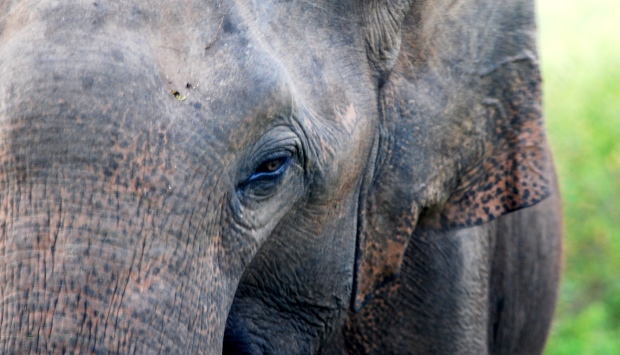
Ecologists have mapped Asian elephants in the Indian state of Karnataka down to the smallest forest administrative unit. The detailed map, which shows where elephants exist inside and outside protected areas, could help conservation planning and minimize human–elephant conflicts.
Karnataka has the largest population of Asian elephants (Elephas maximus) in India. But recent decades have witnessed increased pressure on their habitat and clashes between people and the jumbos. A detailed map of elephant distribution is crucial to understand where humans should get priority, where elephants should and where they can coexist. Yet, there is no microscopic map of Asian elephants anywhere.
Read the rest over at Nature India.
Photo credit: Subhra Priyadarshini
The 13 most shielded eggs laid by birds
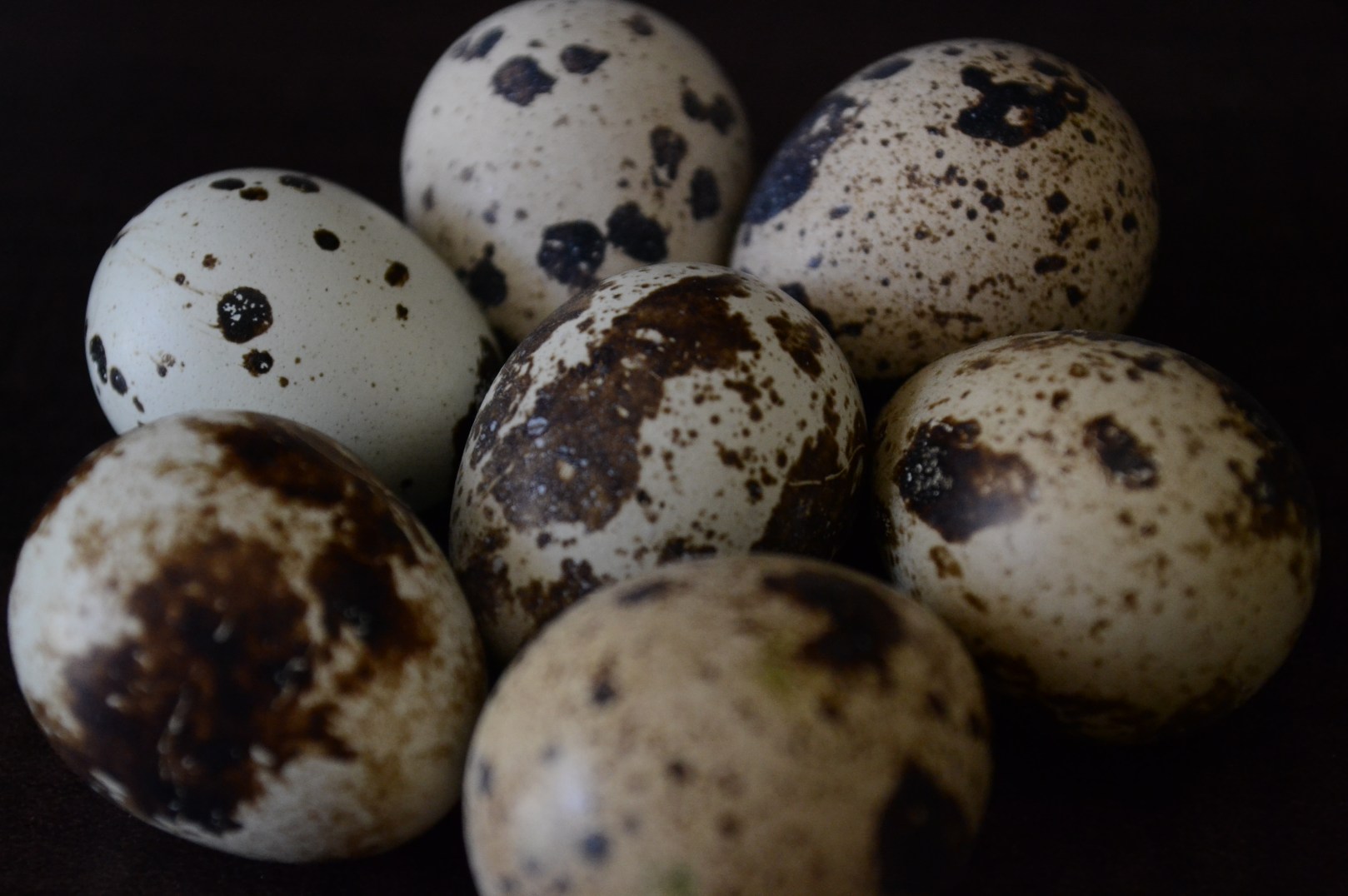
Birds prepare their eggs for the worst, whether the risk comes from predators or just the location of their nests. This Easter I wrote about some of these amazing eggs for BBC Earth. Here’s one of the birds eggs I highlighted in my piece for their sheer camouflage (besides their beauty):
Japanese Quail (Coturnix japonica)
A female Japanese quail is selective about where she lays her eggs. She chooses a background that matches either the colour of her eggs or their pattern, whichever is more striking.
If her eggs have only a faint pattern, the female chooses a site that matches their colour. But if they have a strong pattern, she goes for a site that blends with it, and which hides the contour of the egg. This means the female must know the pattern of her own eggs.
To read about other wonderful bird eggs, click here!
Mapping human proteins
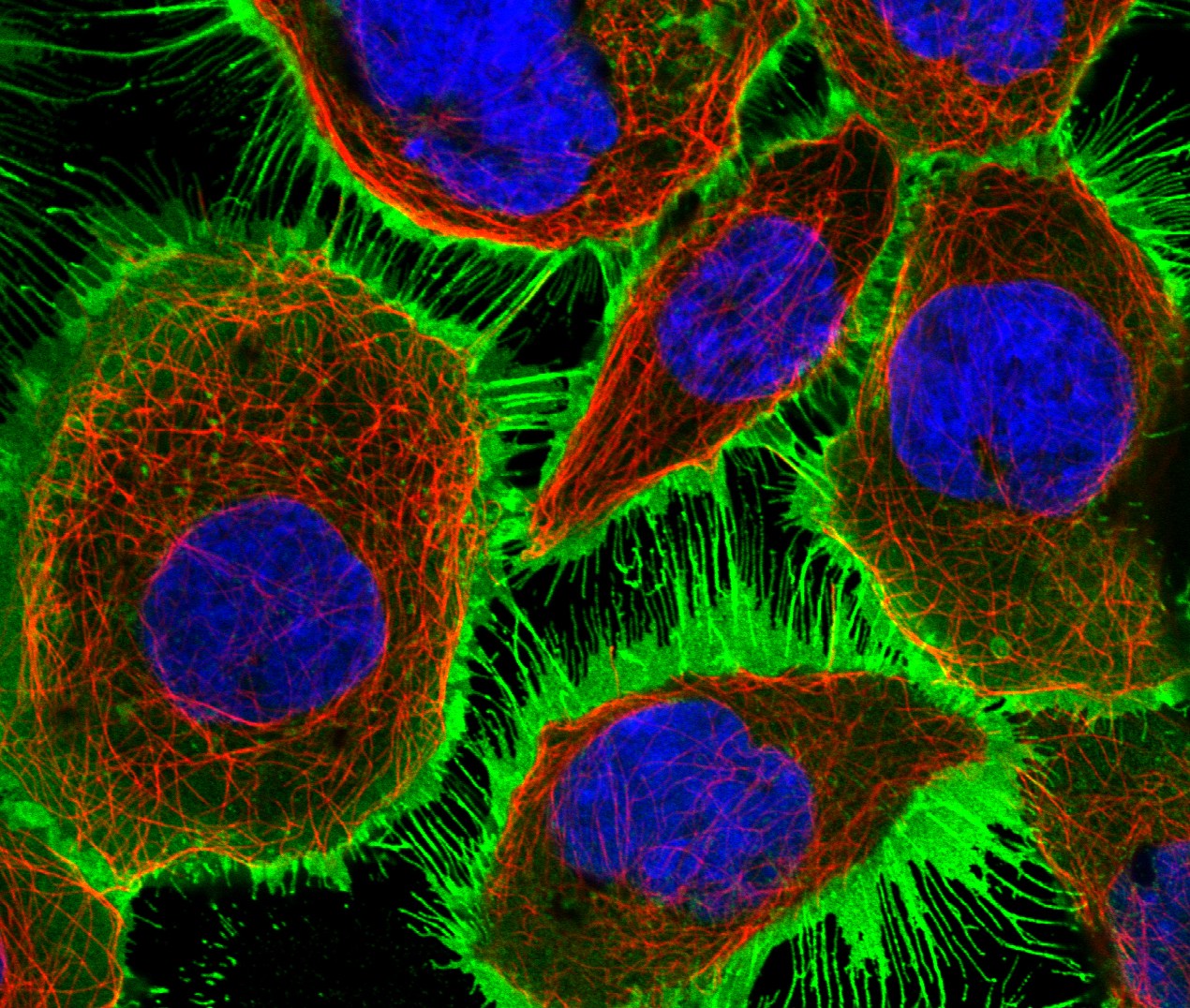
An international consortium of researchers has created a catalogue of proteins that build the human tissues and organs, pinpointing which proteins are present where and at what levels. The catalogue will help in new drug development.
Part of the Human Protein Atlas project launched in 2003, the catalogue also pictures proteins in individual cells and generates an open source database of 13 million images.
To profile proteins the researchers examined 44 human tissue and organ samples using a technique that exploits antigen–antibody interaction. The antigen here is a protein in the sample and antibody a reagent that binds to the protein.
Since antibody reagents were available only for a handful of proteins, the team had to make scores of reagents in-house to be able to spot every protein. There are 20,000 odd protein-coding genes, some of which code for more than one. In all, they deployed 24,028 reagents corresponding to proteins coded by almost 17,000 genes…
Read the full story here at Nature India.
Photo credit: The Human Protein Atlas

Headhunters of the animal kingdom
A pair of phorid flies hovers over a wounded ant. While the male hangs back, the female lands and walks around the ant, examining it and poking it. Then she hops onto it and rips its head off. Finally, the female drags her trophy across the forest floor to an isolated, safe place, and eats it.
This never-before-seen behaviour is performed by an insect called Dohrniphora longirostrata. It belongs to a group of insects called phorid flies or scuttle flies, or sometimes “coffin flies”.
Several phorid flies have been nicknamed “ant-decapitating” flies because they, well, decapitate ants. But in every known case, the decapitation was incidental. For instance, fire ant decapitating flies lay eggs inside healthy fire ants. When the larvae hatch, they head straight for the ant’s head and feast on its contents. Eventually the head pops off the ant’s body, which is left behind twitching like a zombie.
D. longirostrata is the first phorid fly known to actively cut off an ant’s head before eating it. The discovery has been published in Biodiversity Data Journal.
Photo credit: Brian Brown
Exceptionally preserved 300-Myr-old fossil
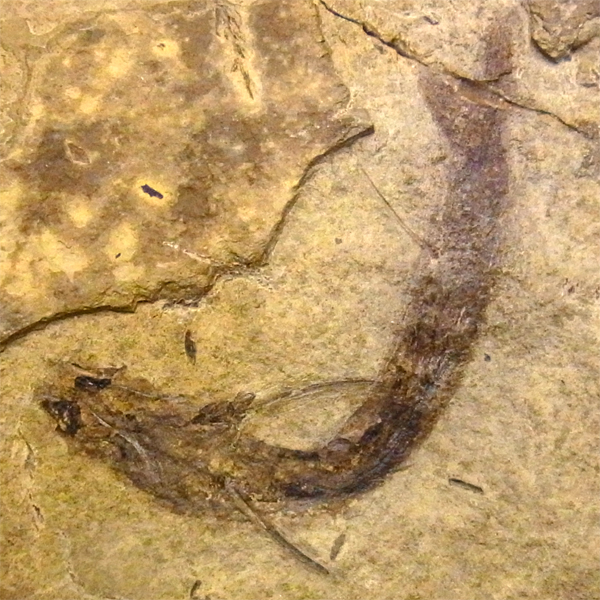
Researchers have unearthed a fossil fish so well preserved, it still has traces of eye tissues.
What’s more, these fossil tissues reveal that the 300-million-year-old fish called Acanthodes bridgei (pictured), like its living relatives, possessed two types of photoreceptors called rods and cones—cells that make vision possible. This is the first time that mineralized rods and cones have been found conserved in a vertebrate fossil, the team reports online today in Nature Communications, as soft tissues of the eye normally begin to disintegrate within days of death.
Read the full story at Science magazine.
Photo credit: Tanaka et al., Nature Communications
Treasure trove of new frogs found in India
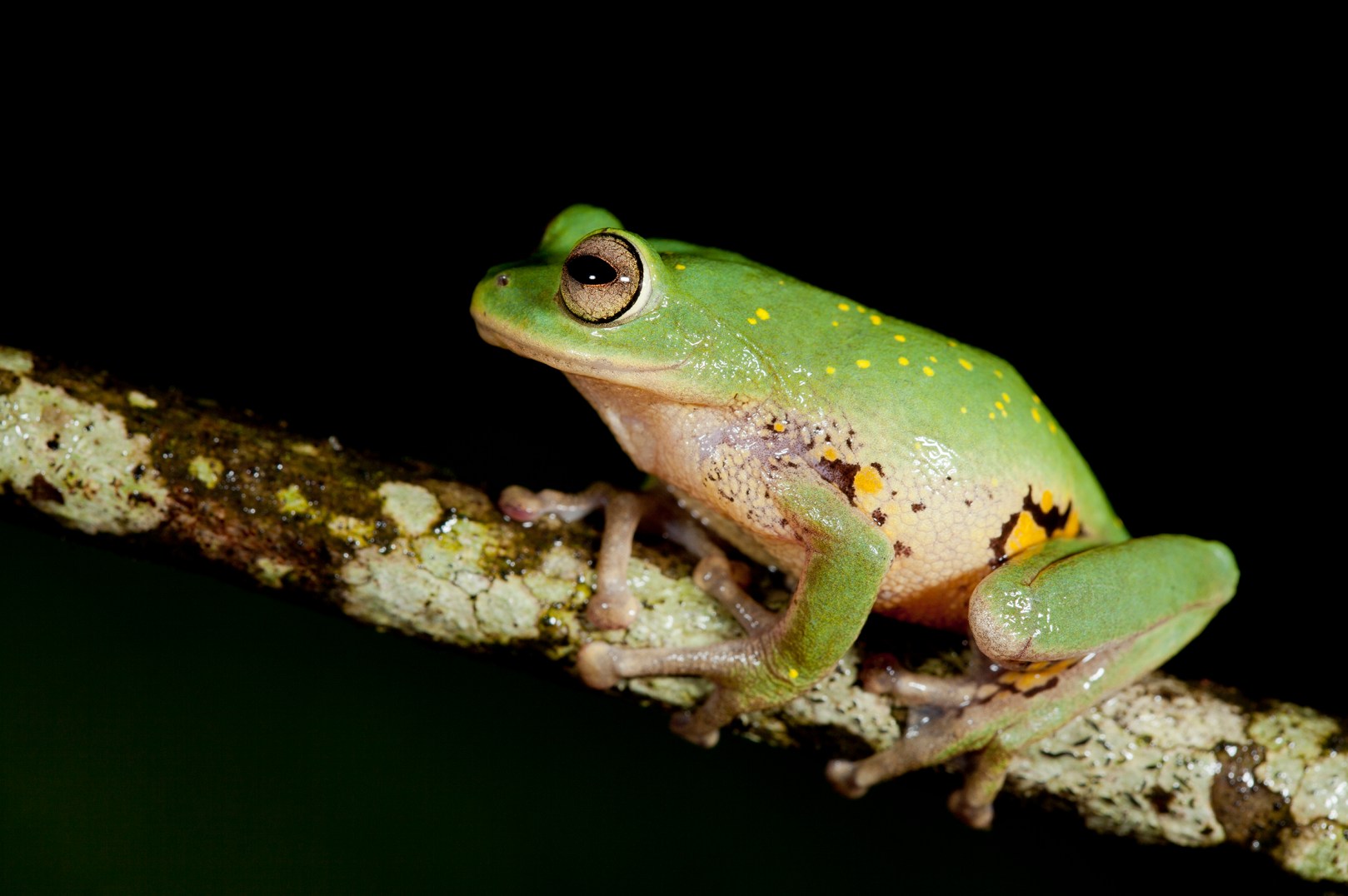
Nine new species of bush frog have been discovered in the Western Ghats, a mountainous region in southern India that is a hotspot of biodiversity.
Bush frogs are tiny animals, found mainly in South and South-East Asia, some of which can fit onto a 20 pence coin. Beginning in 2008, S. P. Vijayakumar, then at the Indian Institute of Science in Bangalore, has been scouring the Western Ghats to find them. The new species he has found all belong to the genus Raorchestes, and he has identified them based on their appearance and genetics. Vijayakumar and his colleagues have published their findings in Zootaxa.
The Western Ghats is home to many species of frog, including the 14 dancing frogs discovered earlier this year. That’s because it is a fragmented landscape, with hills, valleys and plateaus. This means populations of frogs can easily wind up evolving in isolation.
Photo credit: S. P. Vijayakumar
Helping humans coexist with elephants
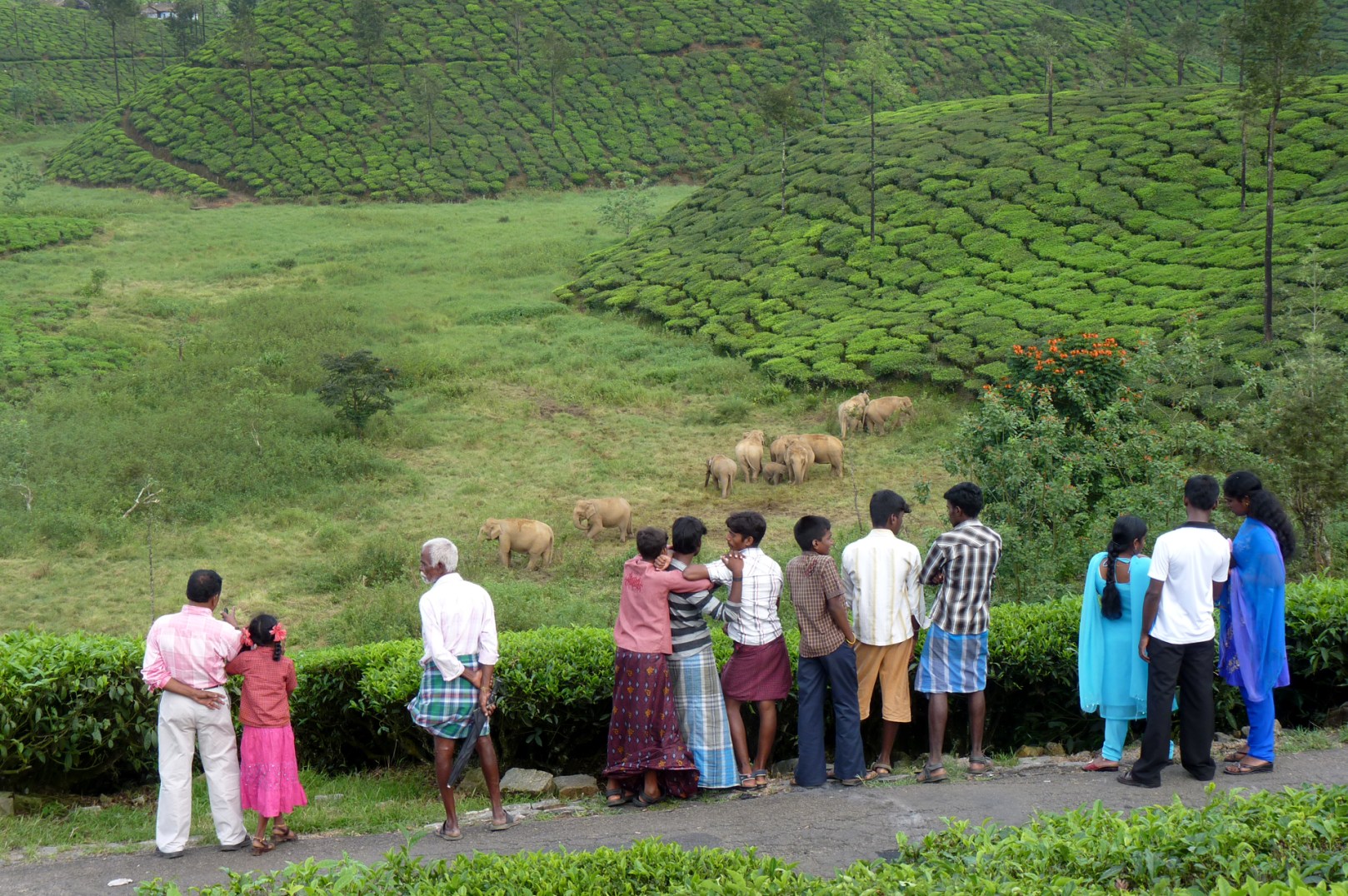
Promoting coexistence of humans and elephants in Anamalai Hills (literally “The Elephant Hills”), situated in the Western Ghats of southern India, has been the key objective of M. Ananda Kumar for over a decade. A wildlife biologist with the Nature Conservation Foundation, Kumar is a staunch believer in the benefits that involving local communities in conservation work can reap. Kumar’s work on human–elephant conflict resolution in the Ghats has been recognized with the Carl Zeiss Wildlife Conservation Award.
In an interview with me, Kumar speaks of the change that has been brought about in the attitude of people towards elephants—from hostile to tolerant.
Excerpts from the interview:
What threatens elephant survival in India?
Activities such as setting up of micro hydel projects, dams, power lines or roads in prime elephant habitats pushes these animals out of their habitat into neighbouring towns and villages. That leads to negative interactions between people and elephants, and is detrimental to the elephant population in the country.
Read the rest of the interview at IndiaBioScience.
Photo credit: M. Ananda Kumar.
Viral outbreak threatens the survival of amphibians
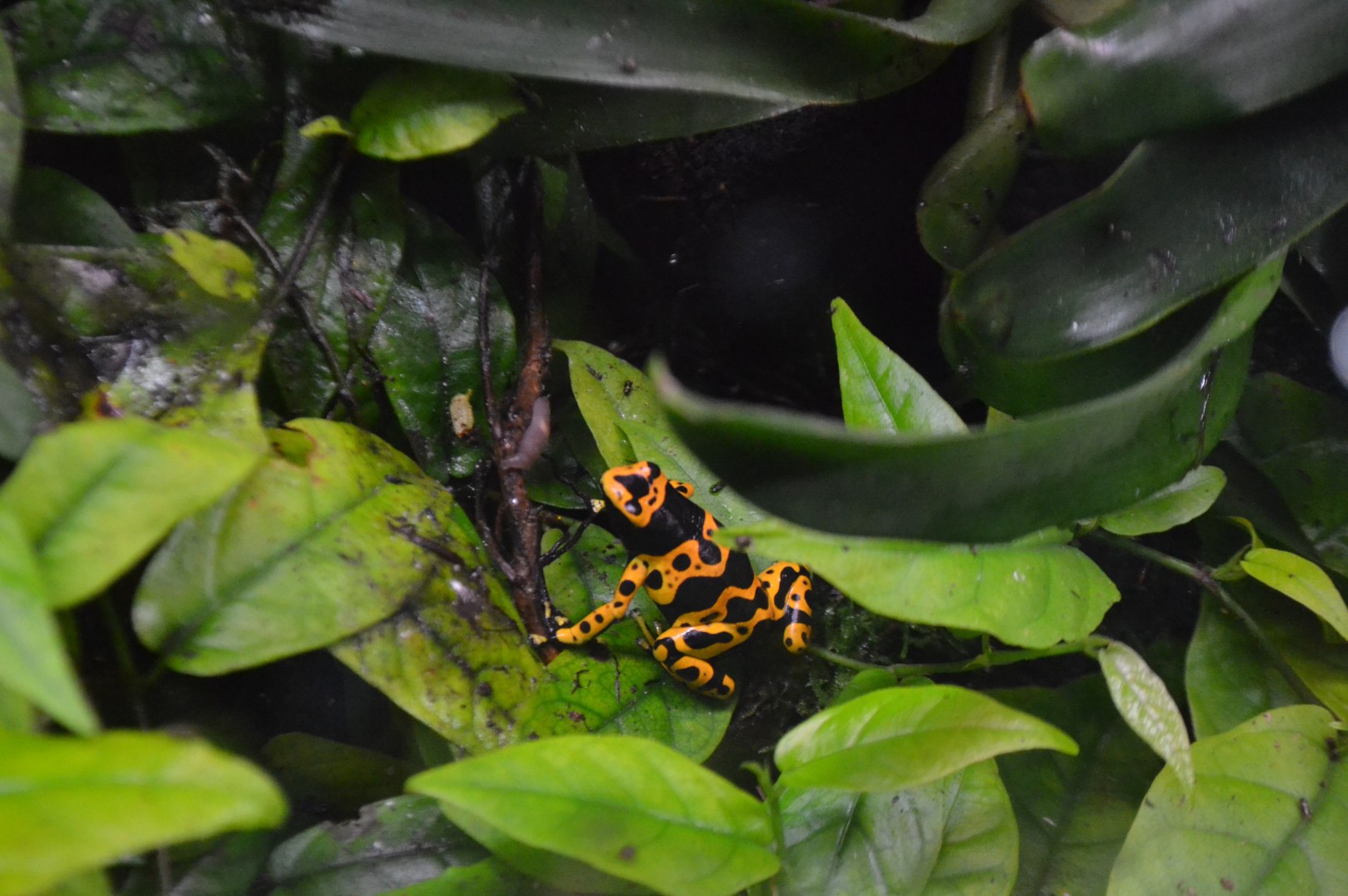
A viral outbreak is killing amphibians, including frogs, toads and salamanders, in the Picos de Europa National Park in Spain. As if the imminent local extinction of amphibians wasn’t grim enough in itself, their disappearance, scientists fear, could also tip the ecological balance in favour of species amphibians feed on.
A team of researchers from Spain and the United Kingdom started monitoring amphibians in the national park in 2005 when they first noticed a die-off from viral infection. The team is now the first to report two related, highly infectious viruses – the ranaviruses – simultaneously infecting multiple amphibian species at several locations in Spain.
“Ranavirus infection is often associated with severe disease and mass deaths of amphibians but previously decline of only one amphibian species had been [quantified]. Here, we show three amphibian species showing simultaneous population collapses in the Picos National Park,” says Stephen J. Price, researcher at University College London and an author of the study published today in the journal Current Biology.
Snails suffer genetic damage from pollution
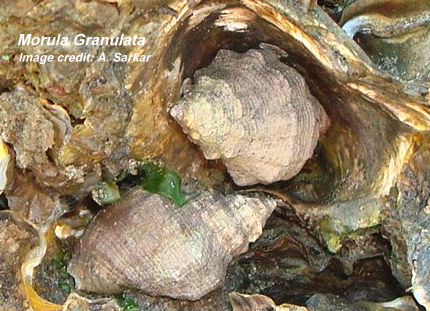
Pollutants from oil spills, shipping activities and industrial effluents could be the reason for genetic damage in snails of Goa, research has found. The extent of genetic damage in snails could serve as a measure of the health of a marine ecosystem, it says.
A team of researchers collected snails of the species Morula granulata from nine locations along the coast of Goa – a major tourism and seafood industry hotspot of India. The team learnt that the extent of damage in the genetic material (DNA) of these snails increased with rising levels of toxic pollutants along the coast.
“When toxic contaminants, such as polycyclic aromatic hydrocarbons (PAHs), are taken up by marine organisms, the snails will try to metabolize the contaminants for subsequent elimination. The toxins are degraded, ultimately converted into by-products and removed from the body,” explains A. Sarkar, lead author of the study at Global Enviro-Care, Goa. “But during their metabolism, reactive intermediate stages are formed, resulting in DNA strand breaks.”
Sarkar and co-workers used molecular biomarker techniques to assess breaks in the DNA isolated from snails and determined its integrity. They observed that DNA integrity reduced by as much as 56% at one of the most polluted of the chosen sites (Hollant) compared to the non-polluted, reference site (Arambol) located farther away from the industrial belt. They found the concentration of PAHs in sediments to be highest around Hollant (5.17 μg/g) and lowest at Arambol (1.65 μg/g) among all sites.
Read the rest at IndiaBioScience.
Photo credit: A. Sarkar
 Richa Malhotra