Monkey mom eats mummified baby

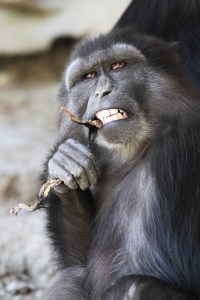
Evalyne9bisPrimates are known both to grieve their loved ones and practice cannibalism, but for the first time, scientists have recorded a Tonkean macaque eating her dead baby.

Researchers studying macaques at the Parco Faunistico di Piano dell’Abatino animal sanctuary observed a new mother named Evalyne “caring” for her deceased infant for weeks, and then consuming its mummified body until nothing but a single bone remained.

Tonkean macaques—which are native to Southeast Asia—tote around their babies’ corpses for hours or, even days. It could be a manifestation of grief, or an absence of understanding that the offspring is dead.

“This kind of behavior has been documented in chimpanzees and a few other primates, with mothers carrying their dead infant until it disintegrates,” notes Frans de Waal, a primatologist at Emory University who was not involved in the new research.

To read more, go to National Geographic news.

Photo credit: Arianna De Marco.

Cracking the mystery of not cracking the eggshell

Greater Ani is not your regular cuckoo. Rather than dump its eggs in the nests of other species it builds its own and raises its young alongside other breeding Anis. The eggs bump into each other with quite some force as parent birds turn them during incubation. Now, researchers have shown that Anis have evolved eggs with the added protection of an uncommon mineral that keeps the eggs from cracking under pressure.

Vaterite, a form of calcium carbonate, sits on the eggshell of some birds in tiny spheres of varying size. It is less stable and abundant than calcite – another form of calcium carbonate that primarily constitutes the shell. Vaterite gives freshly laid Ani eggs their white chalky appearance. As incubation progresses, it gets scratched, exposing patches of the pigmented calcite underneath. When scientists studying nesting Greater Anis (Crotophaga major) in the Panama Canal noticed this change in the egg surface they decided to look deep into it.

Read the rest of the story here at Chemistry World.

Photo credit: Christina Riehl

Fungus creates zombie bugs with a short afterlife

Dying on a bed of flowers might seem like a good way to go. Except it’s not when you’re a beetle suffering a gruesome fungal infection.

Goldenrod soldier beetles (Chauliognathus pensylvanicus) feed and mate on flowers – and that’s where some of them meet their end, too. When infected with the fungus Eryniopsis lampyridarum, the beetles clamp their jaws onto a flower and die soon after.

Hours later and still stuck to the flowers, the dead beetles’ wings snap open as though ready to fly. With their wings raised, these beetles even attract mates – live males were seen having sex with zombie females.

Read more about the zombie beetles here at New Scientist.

Photo credit: Donald Steinkraus

This tree leans more than the Leaning Tower of Pisa

Image-1Never mind the Leaning Tower of Pisa – this is the leaning tower of pines.
Cook pines are towering trees that were once restricted to their native home of New Caledonia, an archipelago in the Pacific Ocean. Through cultivation, they have taken root across tropical, subtropical and temperate regions around the world.

The trees often have slightly tilting trunks. Scientists have now noticed a bizarre pattern in their tilt: they lean south in their northern range and north in their southern range.

Find out why they lean in opposite directions in my story for New Scientist.

Photo Credit: Matt Ritter

Tadpoles piggyback on strangers to avoid getting eaten — by siblings

Newborn poison frogs of Peru have quite an appetite. If left home alone in their hatching pool, the ravenous tadpoles will eat each other. To keep the tadpoles from gorging on their siblings, their doting father will carry them one at a time on his back and drop them in separate pools, where other food is available.

Some frog fathers, however, abandon their young. For unknown reasons, these males leave and never return to fetch their developing offspring.

But there’s a twist in the tale. To find out what that is, read the full story at Live Science.

Photo credit: Lisa M. Schulte

Female dragonflies drop dead to avoid males

Moorland Hawker Dragonfly-1-Credit-Rassim KhelifaOnce a female dragonfly has mated, all she is interested in doing is laying eggs and getting on with her life. So, when stalked by an unwelcome lover (or two), she crashes to the ground and plays dead. When the duped males eventually leave, the female flies off. The behavior was reported recently in the journal Ecology.
This may seem counter-intuitive, for one “purpose” of a species is to leave as many offspring as possible. But female dragonflies “know” what’s best for them. And what’s that? Find out in my story for Live Science.

Photo credit: Rassim Khelifa

Wasp turns host into a self-sacrificing zombie

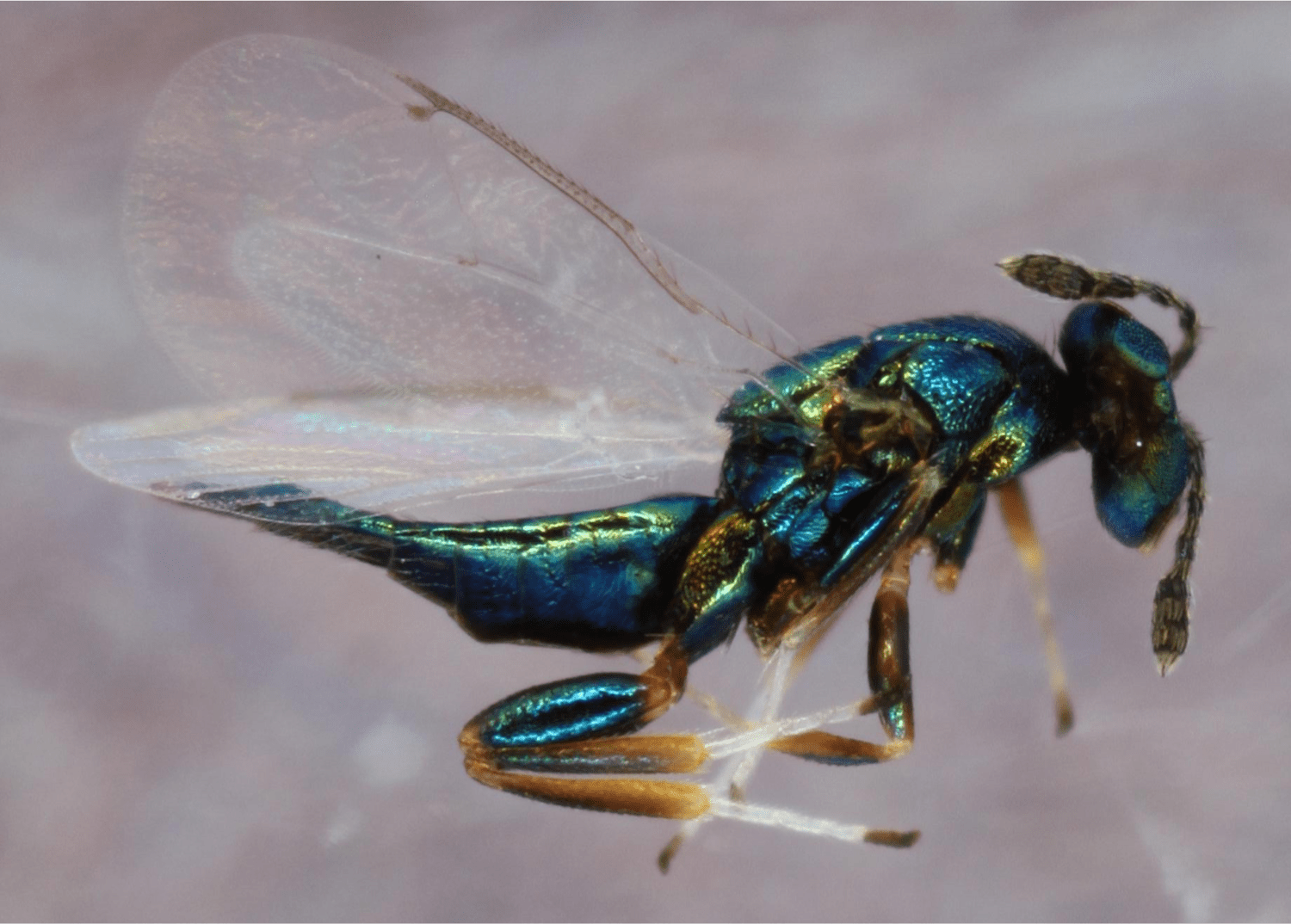
If there were a horror movie set in the animal kingdom, a turquoise-green insect named the “crypt-keeper wasp” would likely play a starring role. A new study has found that this crafty, parasitic wasp can manipulate other parasitic wasps to finish an assigned task and then become its meal.

The amber-colored victims are known as “crypt gall wasps” (Bassettia pallida). They nest in tiny cavities called “crypts” on their host tree, which provides free nutrition throughout its development. Typically, when the adult wasps are ready to leave, they chew a hole through the trees’ woody tissue and make their way out. But for some gall wasps, things don’t go according to plan.

To find out why, go to Live Science.

Photo credit: Andrew Forbes

Traffic noise impacts frog survival

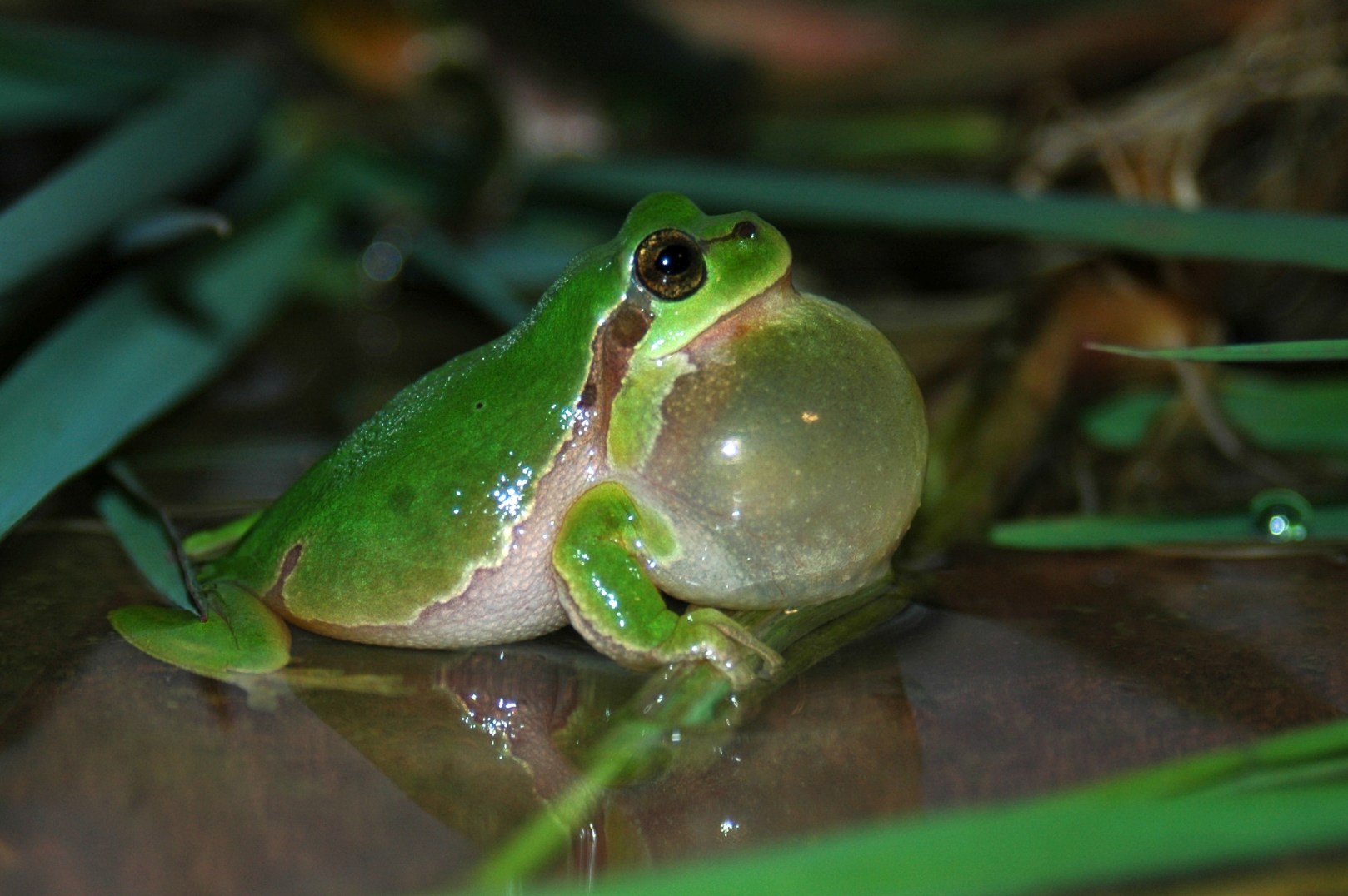
If you’ve ever lived near a busy road, you’re familiar with the noise of cars whooshing by and ear-piercing honks. Traffic noise is a well-known source of stress in humans. Now, a team of researchers has found that it can cause increased stress levels in frogs too. And aside from a spike in stress, traffic noise can have other negative effects on the European tree frog (Hyla arborea), such as suppressed immunity and a dulling of males’ vocal sacs. The team’s results were published last week (January 11) in Conservation Biology.

To study the effects of road noise on frogs, Thierry Lengagne of the University of Lyon, France, and colleagues first recorded noise from a nearby high-traffic road. The scientists then played back the recording to 20 male frogs in the lab. After 10 days of 24/7 exposure to traffic noise at 76 decibels, the frogs showed signs of increased stress.

Read the full story over at The Scientist.

Photo credit: Thierry Lengagne

Sandfish stays sand-free

The sandfish lizard spends most of its life buried in the sand—emerging only to eat, poop, and mate. This lifestyle helps the lizard evade the sweltering desert heat in the Middle East and North Africa, but it causes another problem: inhaling sand particles. Yet when scientists looked into the respiratory tract and lungs of five dead lizards, they couldn’t find a single grain of sand. They couldn’t find an obvious filter in the lizard’s respiratory system, either.

Puzzled? So were the scientists. To know how they solved the mystery, go to Science.

Photo credit: Anna T. Stadler

Slow slimy slugs slaughter songbirds

What harm could a slimy little critter slowly crawling on the forest floor possibly do to a bird? A lot, it turns out. Slugs are shell-less mollusks that have a specialized mouth with a sandpaper-like structure. That rough surface can easily rip the skin and eyes off of a baby bird, leaving the chick to fight for its life.

Many don’t survive.

To be sure, this chick-icide by slugs is rare, European scientists now report. Still, they note, it could become a problem for ground- and shrub-nesting birds if slug numbers climb.

Justyna Chachulska is a graduate student at the University of Zielona Góra in Poland. Katarzyna Turzańska studies at the University of Wrocław, also in Poland. In 2014, both PhD students were monitoring nests of the common whitethroat (Sylvia communis), a mid-size European warbler. They were on the outskirts of the city of Wrocław.

The season was wet and cold. As a result, the ground teemed with slugs. One day, the young scientists noticed a slug in a nest with three newly-hatched chicks. They couldn’t imagine this slug posed a threat to the baby birds. So, they carried on with their work on other nests. But when they returned to the same nest the next day, two nestlings were dead. The third was missing.

To know how this avian murder mystery was solved, read the full story over at Science News for Students.

Photo Credit: Andrzej Wuczyñski

Queenless ant colony trapped in nuclear bunker forever

Keep calm and carry on building. That’s the motto of 100,000 or so wood ants stranded without food in a nuclear bunker until they starve.

Wood ants (Formica polyctena) typically build a cosy mound nest on the forest floor. They seek out the sugary secretions of aphids living on trees and supplement their diet with insects. Now, scientists have uncovered a population of wood ants that has sustained for years without food and light inside a bunker where temperatures are constantly low.

The ant population was discovered in 2013 by a group of volunteers counting bats overwintering in the bunker, which is part of an abandoned Soviet nuclear base near Templewo in western Poland.

Later, Wojciech Czechowski at the Museum and Institute of Zoology in Warsaw, Poland, and his colleagues, entered the bunker to study the ants more closely. They noticed that the wood ants had built a nest on the terracotta floor of the bunker – right below a ventilation pipe. Looking up through the five-metre-long pipe, they realised where the bunker ants come from.

Read the rest of the story over at New Scientist.

Photo credit: Wojciech Stephan

Mummy face

An Egyptian mummy’s head and face have been reconstructed with forensic science and 3D printing, offering scientists a tantalizing glimpse of the individual’s life and death.

The mummified head was discovered by accident in the collections of the University of Melbourne in Australia. A museum curator happened upon the remains during an audit and, concerned about the state of the specimen, sent it for a computed tomography (CT) scan.

“Turns out, [the skull] is actually quite intact; it has got bandages and looks well on the inside,” said Varsha Pilbrow, a biological anthropologist in the University of Melbourne’s Department of Anatomy and Neuroscience. “Of course, that then allowed us to think what to do next.”

With the help of an imaging specialist, Pilbrow and her team used the scans to create a 3D-printed replica of the mummy’s skull. Then, the scientists studied the specimen’s facial-bone features, such as the size and angle of the jaw and characteristics of the eye sockets, to determine that the head belonged to a female. The researchers are calling the specimen Meritamun. They say she was probably not more than 25 years old at the time of her death and was important enough to be mummified.

Read the rest of the story over at Live Science.

Credit: Varsha Pilbrow and Gavan Mitchell

Poo matters: Earwig young survive on siblings’ poo

Desperate times call for desperate measures. As food shortages hit, European earwig babies resort to eating each other’s faeces in their underground homes, helping to keep hunger and death at bay.

In times of plentiful food, the earwig offspring, or ‘nymphs’, feast on scraps of plant and insect material that their mother brings back from her trips above ground, and on food she regurgitates.

But when faced with limited supplies, the nymphs have to make do with what’s around them to survive.

Unlike many other insects that live in groups, European earwigs don’t clear their nest of faeces. Availability of faeces in hard times keeps the nymphs alive for about two more days on average than without them, researchers have now found.

In the lab, researchers deprived 56 five-day-old nymphs of food, and offered 28 of them faeces from their siblings. Nymphs with nothing to feed on survived for an average of 14 days, but those with access to their siblings’ faeces lived for an average of 16 days.

Read the rest of the story over at New Scientist.

Photo credit: Joël Meunier

Butterfly back-stabs its guardian ants

The metalmark butterfly cooperates with ants when it’s a caterpillar, only to stab them in the back when it has metamorphosed into a beautiful – thieving – butterfly.

While still a caterpillar, the metalmark butterfly wins over local ants, including those of the species Ectatomma tuberculatum, with gifts of sugary secretions. In return, the ants, which could easily eat the caterpillar or its adult butterfly form, defend the vulnerable caterpillars from other predators.

But this friendly give-and-take doesn’t last forever, work by Phillip Torres of Rice University in Houston, Texas and Aaron Pomerantz of the University of Florida, Gainesville, has now revealed. When the caterpillars have become butterflies, they turn on their protectors, plundering the source of their nectar.

This nectar is produced by organs called nectaries at the tips of new bamboo shoots, which are tended by ants. Using their mouthparts, they improve the flow from these nectaries, and stop them from running dry. The nectar is an important source of food for them, so they defend these nectaries fiercely.

Read the full story here at New Scientist. 

Photo credit: Phillip Torres

The tadpoles that swim in sand

In 2014, 14 new species of “dancing frogs” were discovered in the Western Ghats, a wildlife-rich mountainous region along the west coast of Peninsular India.

5. Tadpoles of Micrixalus herrei

These Indian dancing frogs are named for the antics males get up to when they want to grab the attention of a female.

Perched on a wet rock in a noisy, fast-flowing stream, a male sings and waves to the females. He lifts and stretches a leg to flag his white, webbed toe.

Any rival males on the territory are literally kicked out by the singing-and-dancing male.

It now turns out that this foot-waving, which was observed in nine species of the genus Micrixalus, is not the only bizarre trait that runs in the family. For the first time, researchers have found the tadpoles of a dancing frog, specifically the Kallar dancing frog (Micrixalus herrei).

Unlike most tadpoles, which live in water, they live underground until they develop into froglets.

Read more about the tadpoles here at BBC Earth.

Photo credit: SD Biju