Egg theft might cause seabird decline

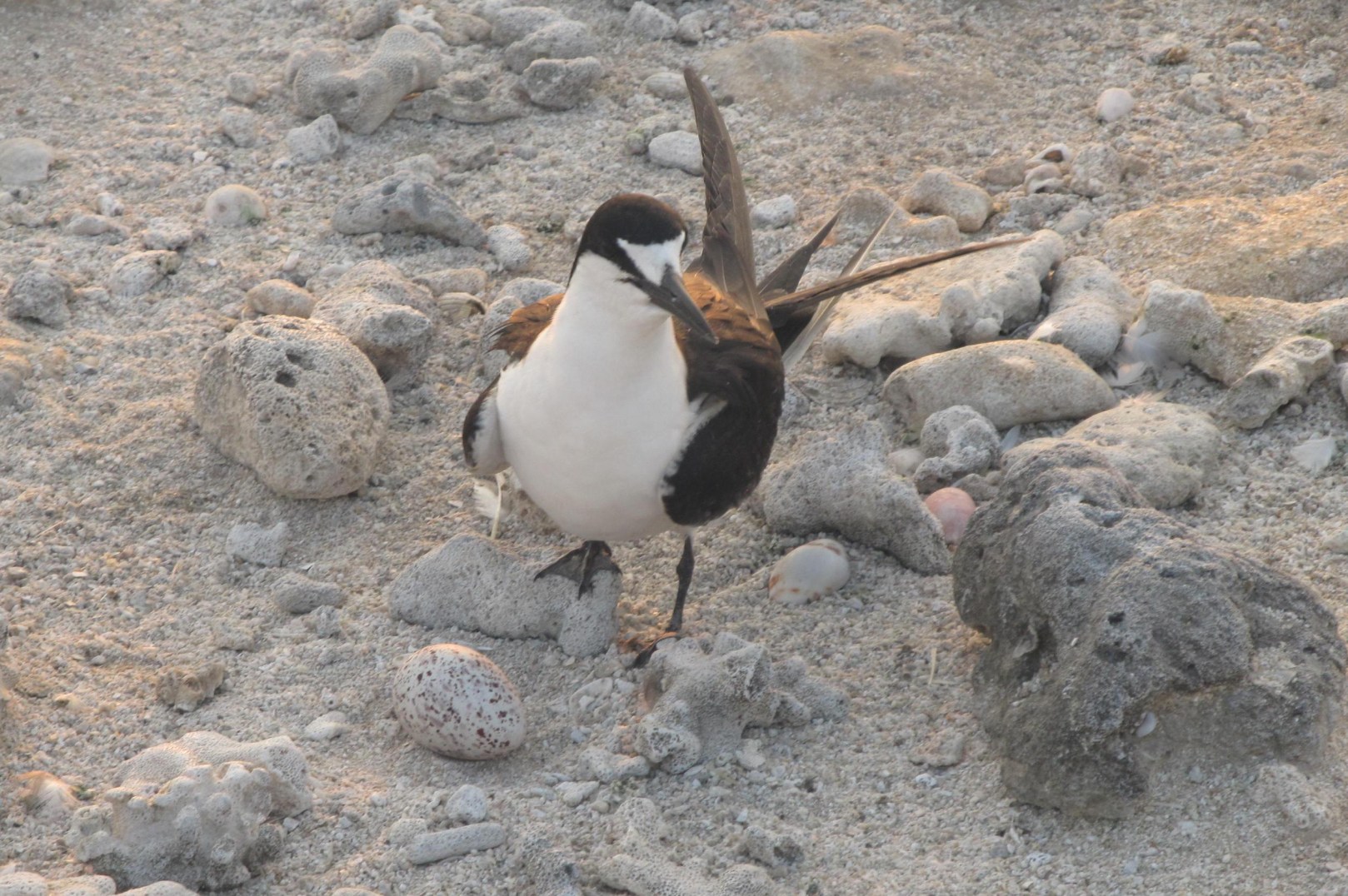
Among the 36 Lakshadweep islands dotting the Indian Ocean, one is particularly famous for its bird life. Pakshi Pitti is a flat sandbar that several species of seabirds come to for breeding. Devoid of predators such as rats and cats, and even humans, it is the perfect place for these birds to nest in.

Except, year after year fisherfolk from the nearby populated island of Kavaratti come to Pitti and plunder its wealth of seabird eggs. On every visit they make, they collect 14%–45% of the eggs. About 72% of the islanders of Kavaratti are involved in poaching and trading eggs from Pitti, showing that the network is quite vast.

The eggs are sought for their supposed medicinal properties, and their trade, scientists fret, could have a huge impact on the island’s seabirds, especially terns, whose numbers have plummeted from 20,000 in the mid-1900s to 970 in 2014.

Pitti was declared a bird sanctuary and afforded legal protection to stop this age-old practice of egg consumption. But a lack of regulation is defeating that purpose.

To know more, read my report published today in The Wire.

Photo credit: Ravichandra Mondreti

How are India’s birds faring?

About 1,500 of the world’s 11,000 bird species are on the verge of extinction, thanks to human activities like agriculture, logging and hunting, according to a report by BirdLife International.

I decided to dig deeper and look at the status of birds in the context of India. After sifting through factsheets after factsheets, here’s what I found: Close to 90 of the 1,200-odd bird species are on the verge of extinction in the country. Of these, 16 are critically endangered, 21 are endangered and 52 are vulnerable. These include not just birds found only in India (or ‘endemic species’) but also ones that migrate to the country.

An additional 74 are near-threatened – they might soon be assigned one of the three threatened species status. Vultures, bustards, eagles, hornbills, woodpeckers, storks are all in trouble. So are robins, thrushes, buntings, babblers.

The state of a stout, white and brown bird, the great Indian bustard, is especially worrying. “It really is in a bad way,” Tris Allinson of BirdLife told me. “It could well be the planet’s next extinction,” he added. A few hundred individuals of the species remain. Though it was declared critically endangered in 2011, not much has changed in terms of protecting its grassland home. Wildlife sanctuaries have been established but a commitment to protecting India’s wider landscape of grasslands is still awaited. Since bustards tend not to remain within protected area boundaries year-round, grasslands outside sanctuaries need to be urgently protected by law.

Things have also become worse for other birds in India – several have been moved to higher threat levels. The endemic Narcondam hornbill (Rhyticeros narcondamii) was vulnerable by 2008 and was uplisted to endangered in 2009; another endemic species, the Manipur bush-quail (Perdicula manipurensis) went from vulnerable in 2012 to endangered in 2013; and the migratory steppe eagle (Aquila nipalensis) was of least concern until 2013 and was uprated to endangered in 2015.

But there’s one recent downlisting that stands out: the endemic forest owlet (Heteroglaux blewitti) was critically endangered until 2016 and was moved down to the endangered category in 2017.

For more, check out my article published here at The Wire.

What’s behind the recent spate of discoveries?

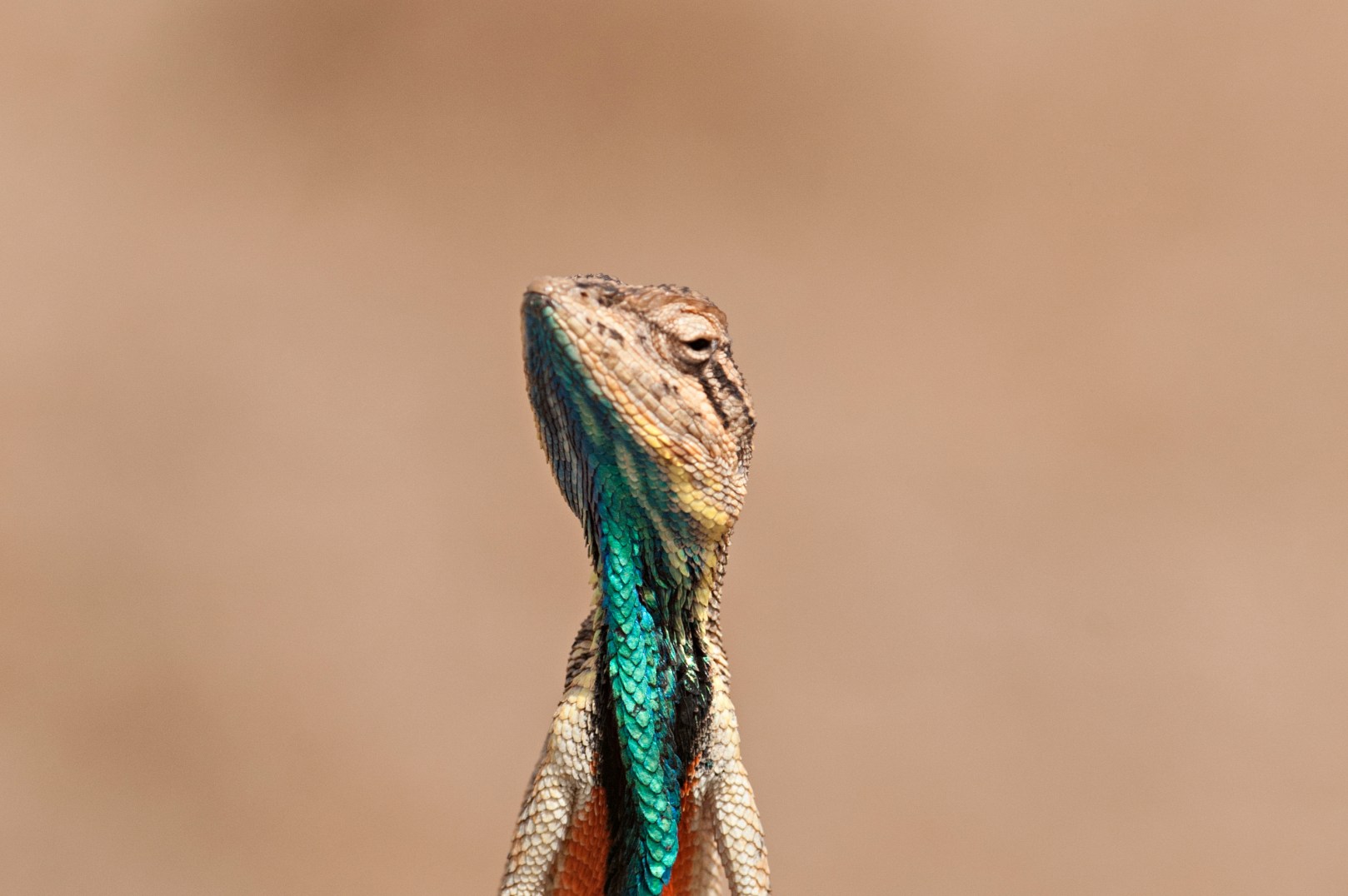
Deepak Veerappan was in-between research jobs when, out of boredom, he started exploring the parched open lands in the south and west of India. He ventured out on his own into sun-baked landscapes in search of a “fan-throated lizard” – a small lizard with a large double chin. His post-doctoral position at the Indian Institute of Science, and thus funding, were yet to come but he had already laid the foundation of what would keep him busy for the next few years.

Only two species of the unusual lizards Veerappan loved watching had been known from India. From observing them in the wild, he knew there were actually more than two. This led Veerappan to discover five new species of fan-throated lizards – named so because the males have loose, stretchable skin hanging from their necks.

This spectacular find is one among a slew of discoveries we have seen so far this year in India. Wherever you look, be it the shores in the south or mighty mountains in the north, sun-scorched lands of the west or wet hills of the east, new species are being found everywhere. And yet scientists say there’s more to come. What on earth is going on?

To find out, read the full feature at The Wire.

Photo credit: Varad Giri

Meet the Western Ghats’ new freshwater crabs

Five new species of brightly coloured freshwater crabs have been found in the Western Ghats, India’s wildlife haven. Of these, two species belong to the genus Ghatiana (discovered in 2014) and the remaining to Gubernatoriana (known since 1970).

Behind the discoveries are an undergraduate student and researchers from the Zoological Survey of India and the Indian Herpetological Society. They described the five new species, named Ghatiana atropurpurea, Ghatiana splendida,Gubernatoriana thackerayi, Gubernatoriana waghi, and Gubernatoriana alcocki, in the journal Zootaxa on February 23.

Prior to this, 36 species belonging to 14 different genera were known from the Western Ghats in the family of freshwater crabs called Gecarcinucidae. So the latest discoveries bring the total species count to 41.

Read all about the new crabs at The Wire.

Photo credits:  Shailesh Bhosale