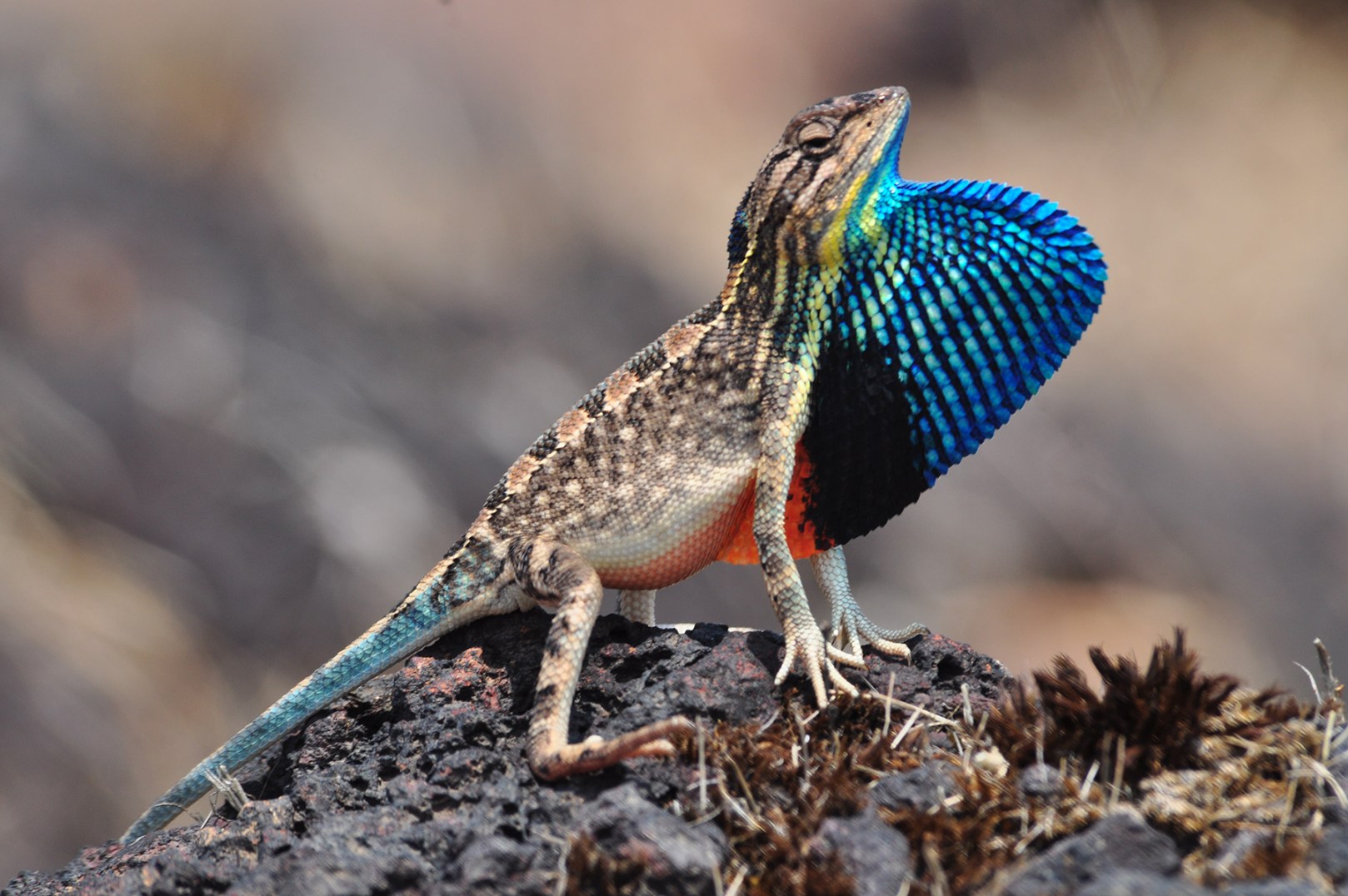
Fan-throated lizards are a group mostly of colorful and some plain lizards that live on sandy beaches and barren plateaus of the Indian subcontinent.
Colourful or drab, all males have a special ornament to lure females – a loose flab of skin under the throat. Doesn’t sound very attractive, does it? But that does it for them. Here’s how: to draw the attention of females, males get their feet on a rock (or any raised platform), stretch their body and extend their loose under-throat into a fan. Hence the name.
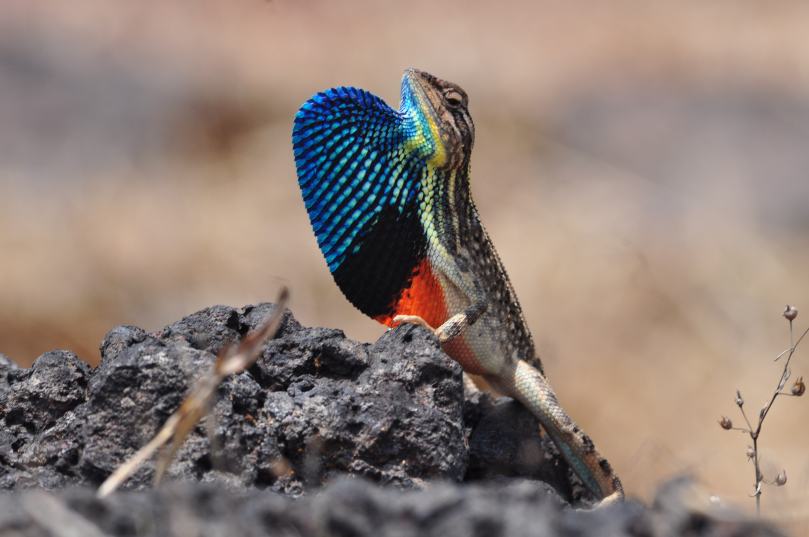
The first species of fan-throated lizard was found in India back in 1829. Since, there have been rumours of more species in the scientific community but discoveries have been few. That changed in 2016 when scientists found 5 new species in one go. Now, they have found that there are at least 15 species, including the ones discovered in 2016.
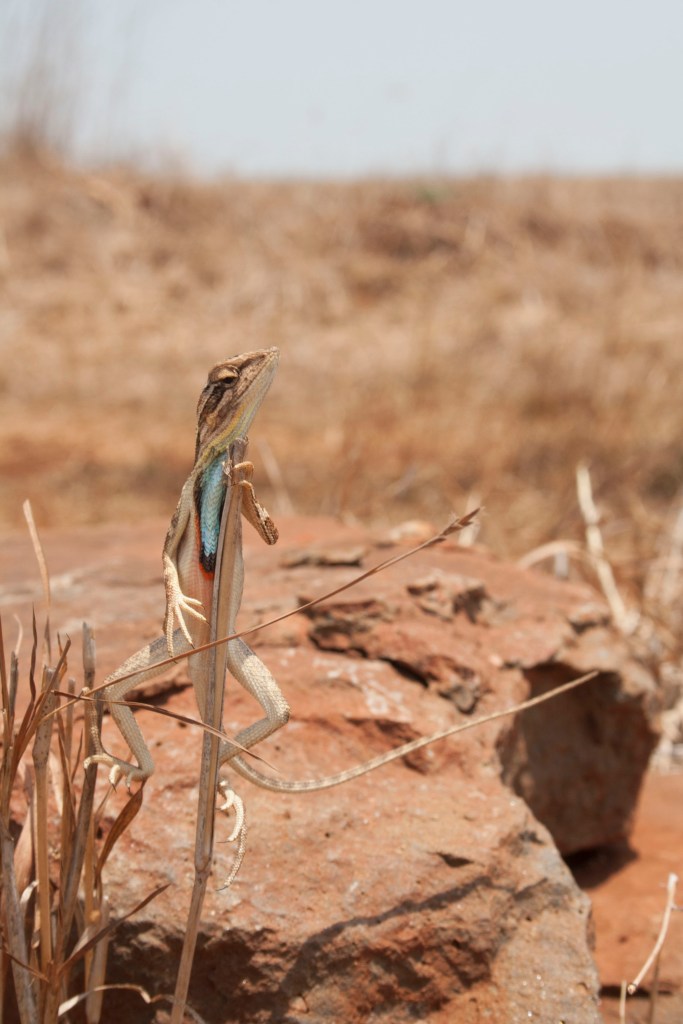
The sheer variety owes itself to changes in climate that happened millions of years ago – with the arrival of monsoons, rains became seasonal and grasslands expanded. This worked in favour of fan-throated lizards as they adapted to these changes and morphed into several species we see today.
I wrote about how a changing climate impacted the lizards for Mongabay-India today. You may also like my other pieces about these beautiful bright beasts published here at The BBC and here at The Wire in 2016.
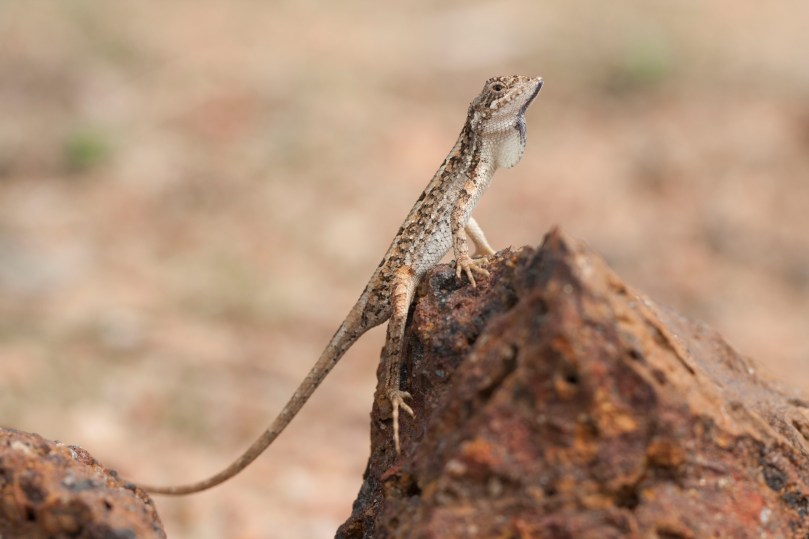
Photo credits: V. Deepak
 Primates are known both to grieve their loved ones and practice cannibalism, but for the first time, scientists have recorded a Tonkean macaque eating her dead baby.
 Once a female dragonfly has mated, all she is interested in doing is laying eggs and getting on with her life. So, when stalked by an unwelcome lover (or two), she crashes to the ground and plays dead. When the duped males eventually leave, the female flies off. The behavior was reported recently in the journal Ecology.



 Richa Malhotra